Traditions of the Moravian Church
We exist to provide a safe haven for all to worship Christ and grow together in faith.
Serving Christ
Loving Others
Building Relationships
Easter Traditions
The Journey Through Lent
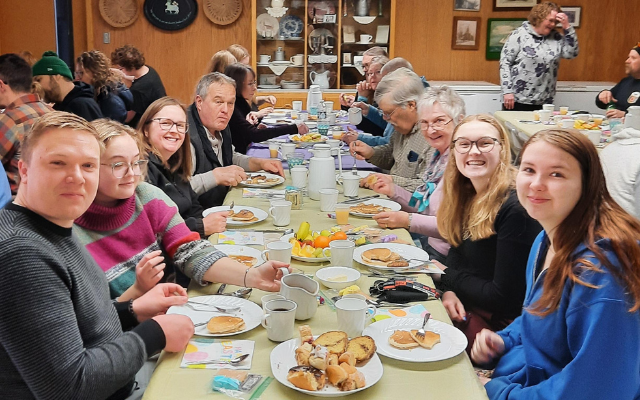
During the season of Lent, which runs from Ash Wednesday through Easter Sunday, midweek gatherings are held in our fellowship hall. Beginning with an Agape meal, we enjoy fellowship together as we check in with one another and discover the joys and challenges of the week. Following this simple meal, we share in a program of study and discussion to learn about God and ourselves. We end each gathering in prayer as we look to support one another through Lent and beyond. Throughout the 40 days of Lent, members are encouraged to grow, study, learn, pray and connect intentionally. The yearly practice of midweek gatherings, time for prayer and connection reminds us all of the importance of making God a focus of our daily lives.
Holy Week Readings and Services
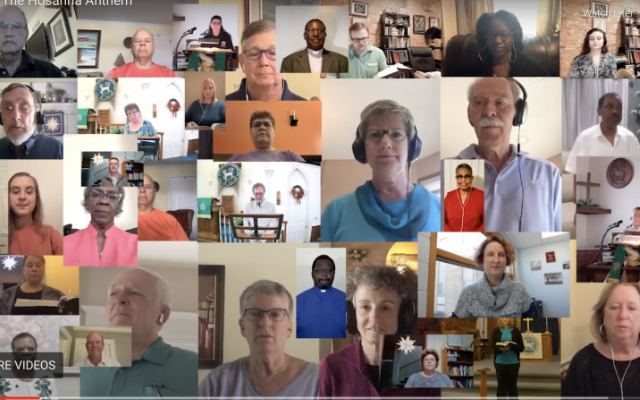
Our Holy Week begins on Palm Sunday with handing out palms and the singing of the “Hosanna” chorus. Members are invited to The Marquardt nightly to listen to the Readings for Holy Week, a Moravian book connecting the four gospels reflecting the last week of Jesus’ life. We gather back at Ebenezer for a worship service on Maundy Thursday with Holy Communion. On Good Friday evening we hold a Tenebrae service, a service of darkness and solemnity and leave in silence as we wait for Easter morning.
Easter Sunrise Service
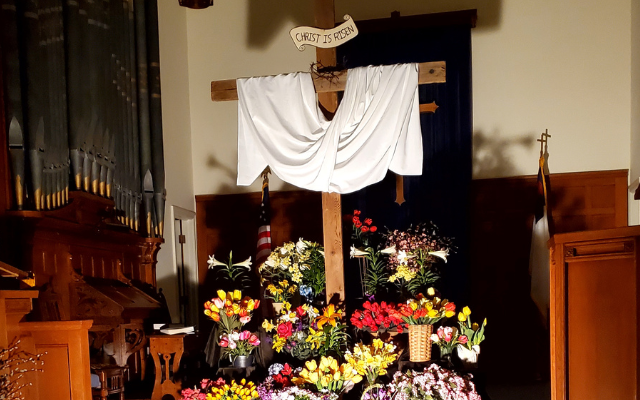
One of the most distinctive Moravian Easter customs is the Easter Sunrise Service, believed to have originated in the 18th century in Herrnhut, Germany. This service begins before dawn in a darkened sanctuary, and proceeds to the Ebenezer Moravian Cemetery, where worshippers gather to proclaim the resurrection of Jesus amidst the tombs, symbolizing Christ’s victory over death. The service is accompanied by the brass band, which play hymns of joy and triumph as the congregation moves from darkness into the light of Easter morning. Following the service, breakfast is served in Heiser Hall (our fellowship area). Our traditional worship service begins at 10 a.m. Easter is the most significant celebration for the Moravian Church, marked by rich traditions that emphasize the resurrection of Christ and the hope it brings. The overall tone of Easter in the Moravian tradition is celebratory yet deeply spiritual, with music, prayer, and the reaffirmation of faith. Moravians are Easter people….
The Lord is Risen! The Lord is Risen, Indeed!
Christmas Traditions
Christmas Worship
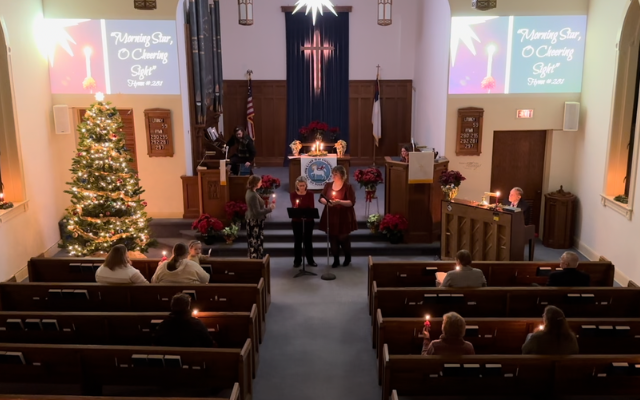
Christmas in the Moravian Church is celebrated with reverence, joy, and distinctive traditions that emphasize the birth of Christ as a moment of spiritual renewal and hope. One of the most cherished customs is the Moravian Lovefeast, a communal meal often held during Advent or on Christmas Eve, where the congregation shares simple buns and coffee in a service of fellowship and gratitude. Music plays a central role, with special hymns and anthems sung, accompanied by the church band, the choir and the organ. The Candlelight Service, held Christmas Eve at 4:00 p.m. and 7:00 p.m., features the distribution of beeswax candles trimmed with red paper frills, symbolizing Christ as the Light of the World. As the sanctuary fills with soft candlelight, the congregation sings hymns that reflect the peaceful and humble nature of Christ’s birth. Our Moravian star, a large 26-pointed LED star, illuminates the sanctuary and many members shine their own Moravian stars on their porches and windows throughout the Advent and Christmas seasons. These traditions create a warm and spiritually uplifting atmosphere, focusing on the message of love, peace, and the coming of Christ into the world.
Moravian Star
A classic symbol of the Moravian Church is the 26-point star and can be seen throughout the Moravian community. There is a very large star that illuminates our sanctuary during Advent and Christmas. The Moravian Star began as a math problem in a German school and has come to symbolize the Star of Bethlehem and the Moravian faith throughout the world.